

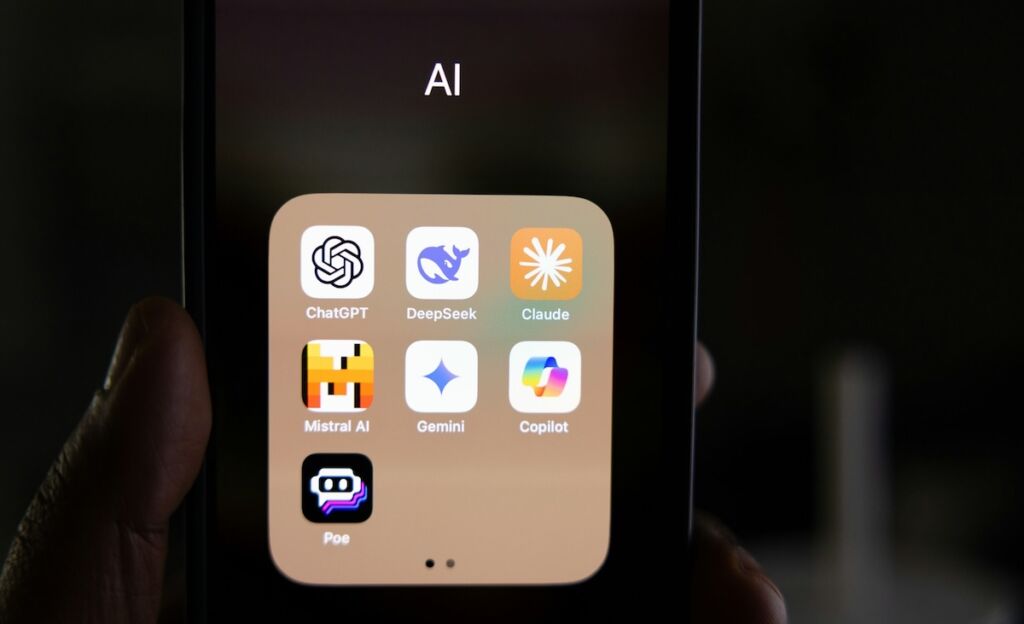
A mid-sized software-as-a-service company recently sat down to review its annual cloud and artificial intelligence infrastructure budget. Six weeks into the fiscal year, the finance team realized a startling reality. The company had already consumed its entire annual token allocation. This scenario is no longer an outlier. It is a symptom of a fundamental structural shift in corporate finance and product engineering.
In a recent panel on CNBC, Glean chief executive officer Arvind Jain and Factory AI chief executive officer Matan Grinberg shed light on this new paradigm. For the first time in the history of information technology, the cost of compute is directly competing with the cost of human talent. Historically, technology budgets represented a minor fraction of overall operating expenditures. Today, executives are actively deciding between allocating capital to API tokens or to future headcount growth.
At Clavis Tech, we believe that choosing between technology and talent is a false dichotomy. The organizations that will dominate the coming decade are not those that attempt to replace their human workforce with API calls. Instead, success lies in building elegant, model-agnostic software architectures where highly efficient artificial intelligence systems serve as high-leverage tools for highly capable human teams.
The structural squeeze on software margins
For decades, the software industry enjoyed a remarkably clean economic model. Once a platform was built, the marginal cost of distribution was virtually zero. This fundamental characteristic allowed software-as-a-service providers to achieve gross margins between 70% and 80%.
The introduction of generative features has disrupted these unit economics. Unlike traditional database queries, every artificial intelligence prompt, search, or document synthesis incurs a direct variable cost in the form of inference tokens and GPU compute.
Recent research from Gartner reveals that even as token prices have dropped substantially year-over-year, total enterprise spending on artificial intelligence has grown by over 300%. This explosion in cost is driven by runaway consumption. Many early implementations relied on a brute-force approach, routing every single user request to the most expensive frontier models available. This is the architectural equivalent of hiring a university professor to perform basic arithmetic.
When software companies layer these high-consumption models onto their platforms without optimizing their underlying architecture, they experience severe invoice shocks. Data from Bain indicates that roughly 65% of software vendors have attempted to manage this by adding artificial intelligence consumption meters on top of existing per-seat pricing models.
This shift to hybrid and usage-based pricing models introduces massive budget volatility for enterprise buyers. When artificial intelligence systems operate autonomously as agents rather than simple assistants, they do not consume user seats. They consume compute cycles and tokens. For software platforms, maintaining profitability now requires a deep understanding of software-as-a-service product engineering that prioritizes strict cost governance and modern middleware design.
For companies looking to modernize their platforms to meet these new economic standards, exploring specialized SaaS product engineering is a critical first step to ensuring architectural resilience and margin preservation.
Why cutting headcount for tokens is a strategic trap
As corporate artificial intelligence budgets balloon, many organizations are funding their technology expenditures by slowing down or freezing headcount growth. Some executives have begun treating employees as parameters in an organizational model, debating whether to optimize for the absolute number of staff or the compute spend allocated per employee.
This perspective misinterprets the true nature of human-AI collaboration. When organizations starve themselves of talent to feed an inefficient, hungry algorithm, they risk losing the institutional knowledge, creativity, and critical oversight required to run a sustainable business. Artificial intelligence is an exceptional capability amplifier, but it is a poor substitute for domain expertise, ethical judgment, and complex relationship management.
We champion a pro-human, human-in-the-loop approach. Instead of treating talent and technology as opposing forces on a balance sheet, businesses must design workflows where humans guide, audit, and refine machine outputs. This collaborative loop ensures high-quality outcomes while mitigating the risk of hallucinations, compliance failures, and broken customer experiences.
To scale human operations effectively alongside technological growth, organizations can leverage strategic staff augmentation to inject high-caliber engineering and operational talent exactly where human oversight is needed most.
The rise of intelligent model routing and orchestration
If the immediate challenge is runaway token costs, the immediate technical solution is intelligent orchestration. Smart technology buyers are moving away from dependency on a single model provider. Instead, they are building dynamic routing layers.
In the CNBC discussion, both Glean and Factory AI highlighted the immediate efficiency gains of multi-model routing. By utilizing a model router, an application can analyze the complexity of an incoming task and automatically direct it to the most cost-effective model that can handle the job.
Consider a typical customer success application:
- Simple classification tasks, text formatting, or basic database queries are routed to lightweight, fast, and inexpensive open-source or task-specific models.
- Highly complex, multi-step reasoning problems or unstructured data syntheses are reserved for the premium frontier models.
This simple routing architecture can reduce token costs by 30% or more, transforming artificial intelligence from an unsustainable expense into a highly optimized utility.
Implementing these sophisticated architectures requires deep expertise in modern middleware. Organizations must build systems that handle asynchronous tasks, manage context windows efficiently, and prevent vendor lock-in. To achieve this level of operational control, engineering teams are turning to advanced AI agent orchestration and integration to construct robust, cost-aware agentic workflows.
Building for sustainable innovation
The current anxiety surrounding artificial intelligence spending mirrors the internet boom of 1999. The underlying technology is undeniably transformative, but market valuations and capital expenditures have temporarily outrun the reality of unit economics. The market modeled perfect demand before the economics settled, and we risk repeating that cycle if we do not ground our technological strategies in fiscal discipline.
The path forward does not involve retreating from technological advancement, nor does it involve replacing human talent with unsustainable token consumption. The solution lies in pragmatic, cost-conscious engineering and a deep commitment to human-centric workflows. Technology leaders must transition their teams from a phase of high-volume experimentation to a highly structured phase of architectural optimization.
As artificial intelligence models evolve, the difference between competing frontier engines increasingly resembles minor variations in specialized academic credentials rather than massive leaps in core capability. For most business processes, utilizing a premium frontier model to execute repetitive, low-complexity tasks is an unnecessary financial drain. By building modular, model-agnostic software architectures and treating technology as a force multiplier for human capability, businesses can cross the bridge from expensive experimentation to sustainable, high-ROI innovation.
Strategic roadmap for technology leaders
To successfully navigate this resource allocation dilemma without sacrificing product performance or organizational morale, chief information officers, chief digital officers, and chief technology officers should implement the following strategic measures:
- Establish a dynamic multi-model routing system that automatically analyzes the complexity of incoming tasks and directs them to the most cost-effective model, reserving premium frontier models only for multi-step reasoning.
- Categorize agentic workflows into synchronous and asynchronous queues, allowing background processes to run overnight on slower, significantly cheaper open-source or task-specific models.
- Implement robust API abstraction layers in the software architecture to decouple the product from any single model provider, preventing vendor lock-in and preserving corporate purchasing leverage.
- Design automated cost-governance guardrails and consumption meters directly into the product middleware to alert engineering teams when token consumption approaches predefined budget thresholds.
- Pivot from headcount reduction to human capacity amplification, strategically deploying staff augmentation to inject specialized engineering talent where human-in-the-loop oversight is critical.
